


Executive search challenges arise when firms must identify, engage, and assess senior leaders who may not be actively looking for new roles. A limited talent pool, confidentiality requirements, complex stakeholder expectations, and lengthy decision-making can make C-level recruitment difficult to manage.
For executive search firms, overcoming these challenges requires more than finding qualified candidates. It involves defining the role clearly, mapping the market, building trusted candidate relationships, protecting sensitive information, and keeping clients aligned throughout the search.
This guide covers eight common executive search challenges and practical ways to address each one, including where recruitment technology can help streamline workflows without replacing recruiter judgment.
TL;DR
-
Limited executive talent: Use market mapping, target-company research, and proactive relationship building to identify qualified leaders.
-
Confidentiality and data risks: Apply access controls, discreet communication protocols, and documented information-handling procedures.
-
Compliance and diversity: Use consistent assessment criteria, review applicable privacy and employment requirements, and monitor the sourcing process for gaps.
-
Candidate disengagement: Set clear expectations, personalise communication, and follow up at agreed milestones.
-
Client expectations and costs: Agree on role requirements, decision-makers, milestones, and success measures before the search begins.
-
Technology: Use executive search software to organise candidate records, coordinate workflows, and track search progress.
8 Biggest Executive Search Challenges and How to Solve Them
Executive search combines talent research, relationship management, candidate assessment, and close collaboration with clients. A weakness in any of these areas can delay a search or narrow the pool of suitable leaders.
The following eight challenges cover different parts of the process, from identifying potential executives to managing confidentiality, candidate engagement, client decisions, and search efficiency.
Challenge 1: Sourcing C-Level Talent Takes Too Long
It is not a piece of cake to source qualified candidates for executive and leadership roles, right?
The talent pool is typically smaller for this type of requirement. As a result, executive sourcing becomes even more challenging and competitive.
It can be extremely time-consuming because the match must be precise.
Solution:
Executive Search Software make sourcing easier for search firms and executive headhunters. Want to know how? Let’s see.
The software for executive search firms can automatically scan multiple databases and online sources to identify potential executives or senior-level talent.
Executive recruiters can even use the Advanced Database Search feature in Executive Search ATS, which comes with sophisticated algorithms to match executives with job specifications based on skills, experience, and cultural fit.
It automates and streamlines the sourcing process.
.webp.dat)
Challenge 2: Managing Complex Data and Confidentiality Risks
The executive recruiters’ team in search firms often handle large volumes of complex and sensitive executive data. It can be really challenging to manage, organise, and utilise effectively.
Also, maintaining confidentiality is crucial in executive recruitment to protect both the candidates and the client company’s privacy.
Solution:
The executive search CRM software offers complete database management features that help your executive recruiters organise, track, and analyse C-level talent and client information easily.
The software ensures all the crucial data and communication history are securely managed and accessible only to authorised people.
.webp.dat)
Challenge 3: Staying Compliant with Executive Search Regulations
Executive search firms may handle candidate information across different jurisdictions, each with its own privacy, employment, and recordkeeping requirements. Requirements can vary depending on where the candidate, client, and search firm operate.
Solution:
Maintaining GDPR compliance is a breeze with executive recruitment software.
It ensures that all interactions with executive-level talent and data handling are in line with relevant laws.
Also, the headhunting software allows the search firm to configure the software according to specific local or industry-specific regulations.
.webp.dat)
Challenge 4: Building Diverse and Inclusive Leadership Pipelines
Currently, it is no wonder that achieving diversity in leadership roles becomes a significant challenge due to unconscious hiring biases and limited access to a broad range of diverse C-level talent and directorial candidates.
Often, organisations lack structured plans that prioritise diversity and inclusion.
As a result, there were missed opportunities to find and attract a diverse range of senior-level talent.
Solution:
Executive search firms can increase and promote diversity in executive recruitment by using AI tools that come with features to ignore demographic factors like gender, age, or ethnicity and solely focus on skills and qualifications.
_(1).webp.dat)
Executive recruitment agencies can leverage analytics features in executive search software to monitor diversity metrics in their C-level recruitment process to ensure their strategies effectively attract a diverse pool.
Challenge 5: Preventing Senior-Level Candidate Ghosting
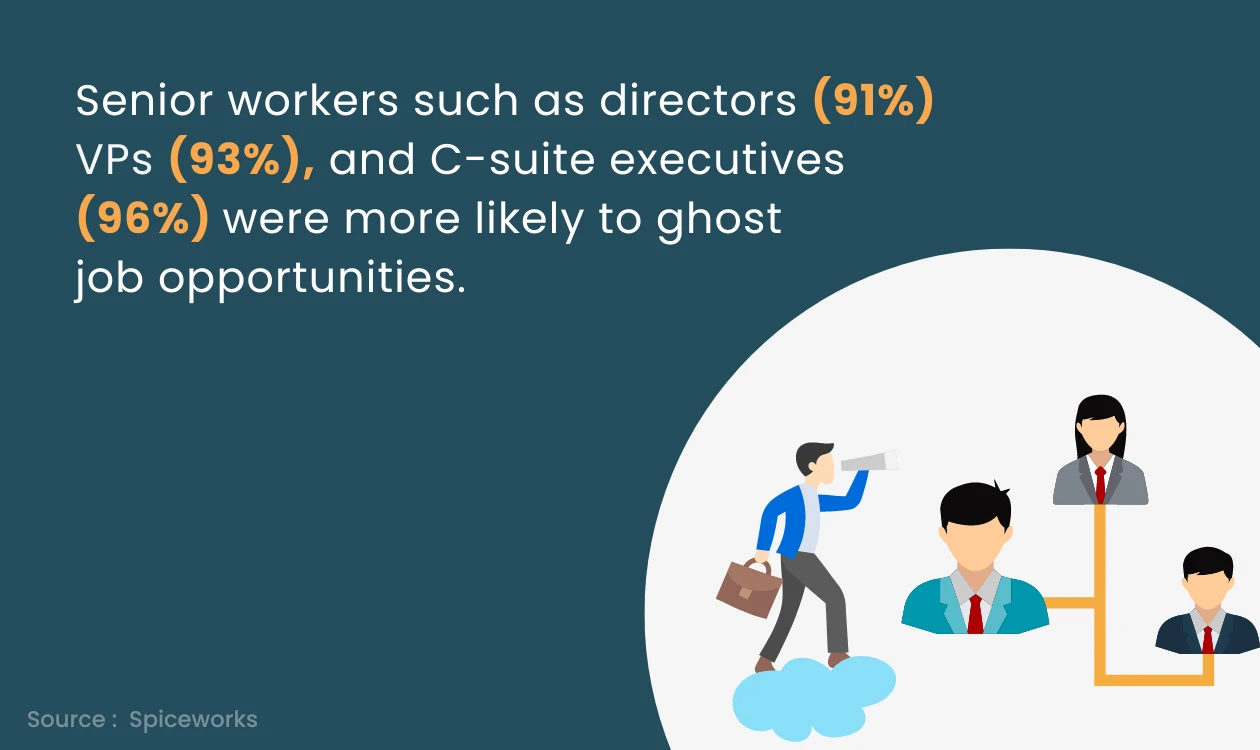
Employer ghosting is not just limited to regular recruitment. It also happens in executive search. Out of nowhere, executive talent just cut all the communication unexpectedly without any update.
As a consequence, it can disrupt recruitment timelines for executive search companies. It reflects poorly on the company's perceived desirability as an employer.
Solution:
Executive recruiters can implement automated follow-ups and reminders to keep executives engaged throughout the process.
There is a feature in Executive Search ATS called Predictive Analytics that identifies patterns or signs of potential ghosting and proactively addresses candidate concerns or disengagement.
_(1).webp.dat)
Challenge 6: Managing Client Expectations and Unrealistic Timelines
Executive search is a long-term game, so it requires patience and consistent effort.
Executive search firms require careful sourcing, vetting, and negotiation to offer such talent to their clients.
However, client companies sometimes require executive-level talent on an urgent basis, and as a result, they put unrealistic expectations and timelines to acquire high-level positions.
Due to that, they may not fully appreciate or understand the complexity and delicacy involved in recruiting top executives.
Solution:
First of all, the client company must understand that mistakes in high-level hires can be costly and time-consuming. So, to avoid that, executive search firms can take these steps:
- Proactively educate clients about the executive search process.
- Set clear, mutual agreements on timelines and deliverables at the start. This way, the agency can align expectations and minimise misunderstandings.
Work with client companies to develop a strategic executive recruitment plan that aligns their needs with realistic market conditions and timelines.
.webp1.dat)
Challenge 7: Reducing Executive Hiring Costs and Long Hiring Cycles
Executive recruitment generally incurs higher costs compared to regular hiring. But why?
Executive search firms have to find and vet potential executive talent for senior and managerial roles. It requires extensive research, background checks, and often international searches. All of this adds to the sourcing and hiring cost.
The process of hiring high-level executives can be lengthy due to the need for careful decision-making and the involvement of multiple stakeholders. It increases the time and resources spent.
Also, if the search firm provides a bad hire at this level, then it is a significant loss of time, cost and effort that executive recruiters put in.
The executive search process often requires specialised search firms or consultants who charge premium expertise and network fees.

Solution:
First and foremost, executive search firms must use executive search software to streamline parts of the C-level recruitment process.
Figure out the loopholes using recruitment analytics and reporting features to optimise your executive search process to decrease time and resources spent without compromising on the quality of hire.
.webp1.dat)
Challenge 8: Competing for Scarce Executive Talent
The cutthroat competition in executive recruitment and the limited availability of C-level talent are making the process more difficult than ever.
That’s not it. The fast pace of technological development requires executives who are not only business-savvy but also adept with new technologies. It narrows the pool of suitable executives.
Solution:
Executive search firms need to build relationships with potential executive talent well before a specific need arises. Executive recruiters can create a reservoir of vetted talent to draw from when the client company give a requirement.
Help your clients position their organisations as desirable employers by highlighting their unique cultural and professional growth opportunities.

Why Executive Search Is Difficult but Manageable
Executive search comes with many challenges, from sourcing passive C-level talent to managing confidentiality, compliance, client expectations, and long hiring cycles.
However, with the right strategy and executive recruiting platform, executive search firms can reduce these obstacles and manage the end-to-end C-level recruitment process more efficiently.
Technology helps executive headhunters organise workflows, maintain candidate relationships, protect sensitive data, and communicate effectively with both senior executives and client companies.
How iSmartRecruit Helps Solve Executive Search Challenges
iSmartRecruit’s Executive Search Software helps executive search firms and headhunters manage complex hiring challenges in a competitive leadership talent market.
It simplifies executive sourcing through integrated premium job boards, centralised candidate data, and relationship management tools. Recruiters can track every lead, nurture senior-level candidates, and reduce time-consuming manual work.
The platform also supports stronger communication with C-level talent, helping recruiters maintain engagement and reduce the risk of candidate ghosting.
For confidential and compliance-focused executive searches, iSmartRecruit offers secure data handling, controlled access, and customisable compliance workflows to help firms manage sensitive candidate and client information responsibly.
Looking to improve your executive search process? Request a free demo of iSmartRecruit and see how it can help your firm achieve better executive recruitment outcomes.
.webp.dat)
Frequently Asked Questions (FAQs)
1. Why is executive search more challenging than regular recruitment?
Executive search is more challenging because it targets senior, high-impact leaders from a smaller and often passive talent pool. It also involves confidentiality, complex stakeholder alignment, cultural fit assessment, and longer decision cycles.
2. How does executive search software help reduce sourcing time?
Executive search software reduces sourcing time by centralising candidate data, automating talent searches, tracking past relationships, and helping recruiters quickly shortlist qualified C-level candidates based on skills, experience, and fit.
3. Can the software manage sensitive and confidential executive data securely?
Yes. Executive search software can help protect sensitive candidate and client data through role-based access, permission controls, activity tracking, secure communication records, and centralised data management.
4. How does the software ensure compliance with laws like GDPR?
Executive search software can support GDPR compliance by helping recruiters manage consent, data retention, access permissions, candidate records, and privacy-related workflows. However, firms should also follow their legal and internal compliance policies.
5. Can executive search software help promote diversity in leadership hiring?
Yes. Executive search software can support diversity hiring by helping recruiters build broader talent pools, standardise evaluations, reduce manual screening bias, and track diversity-related hiring metrics.
6. What makes C-level executive recruitment difficult?
C-level executive recruitment is difficult because senior leaders are rarely active job seekers, require confidential engagement, expect strategic communication, and must align with business goals, culture, leadership expectations, and stakeholder priorities.
About the Author