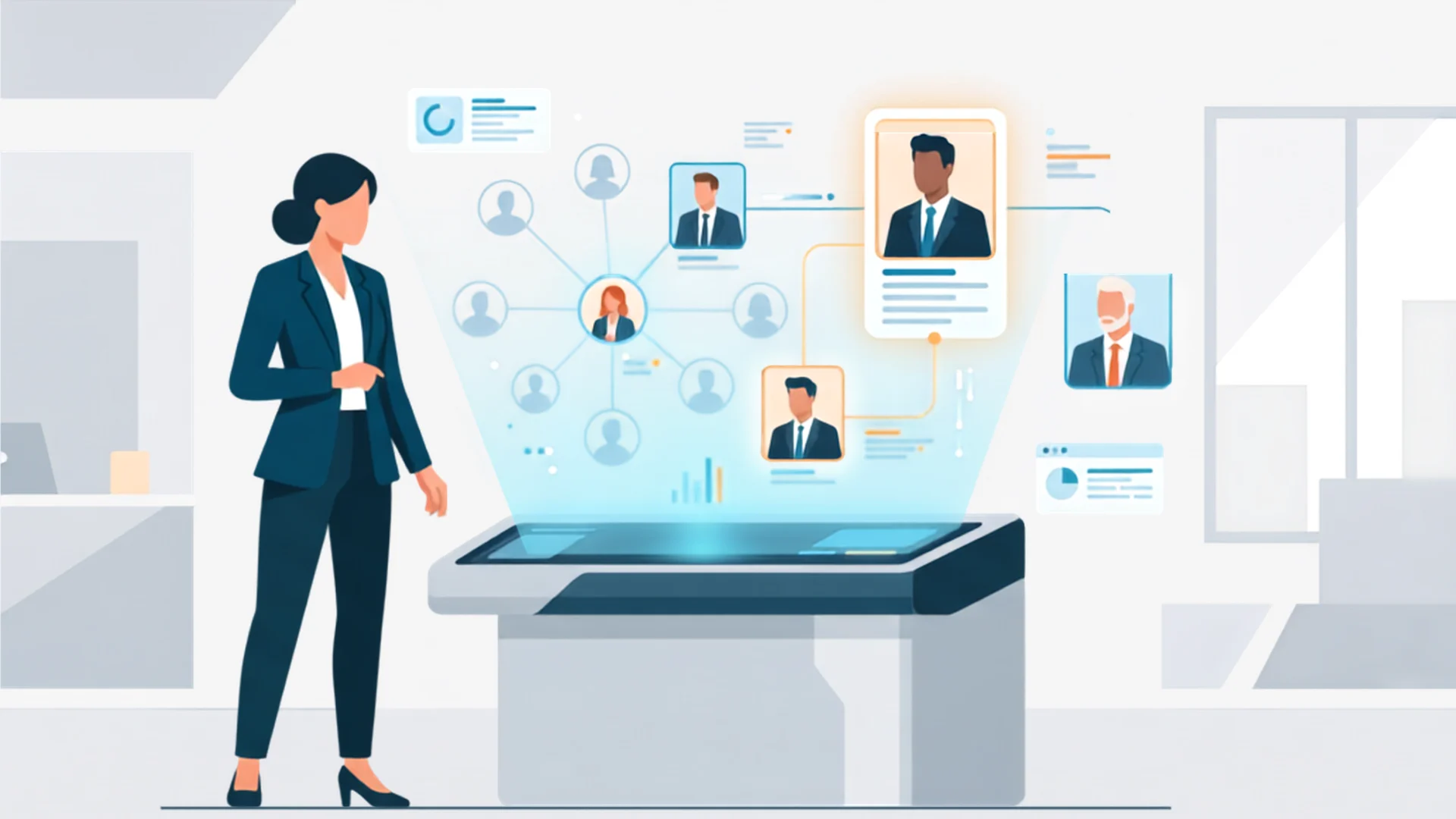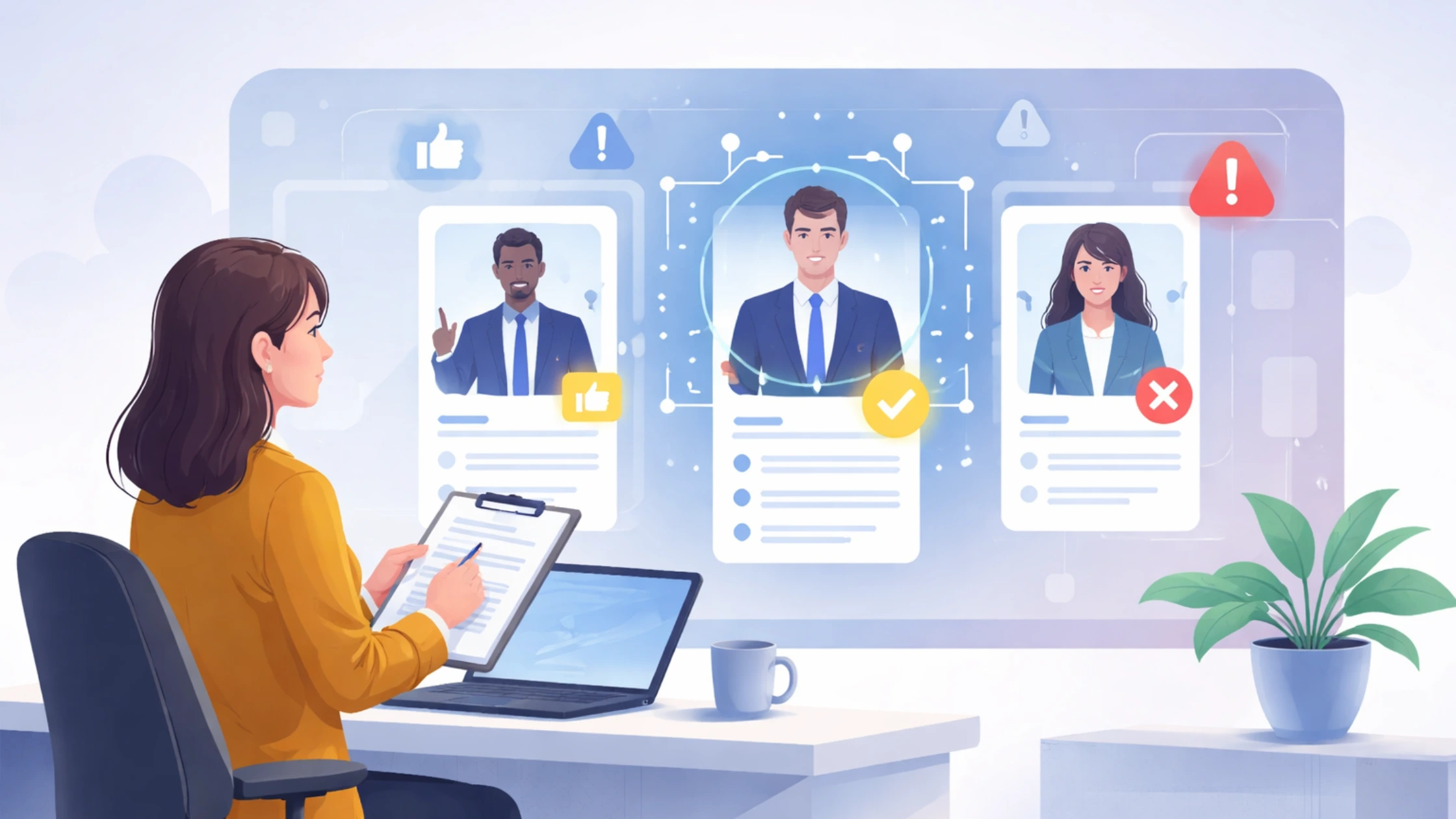

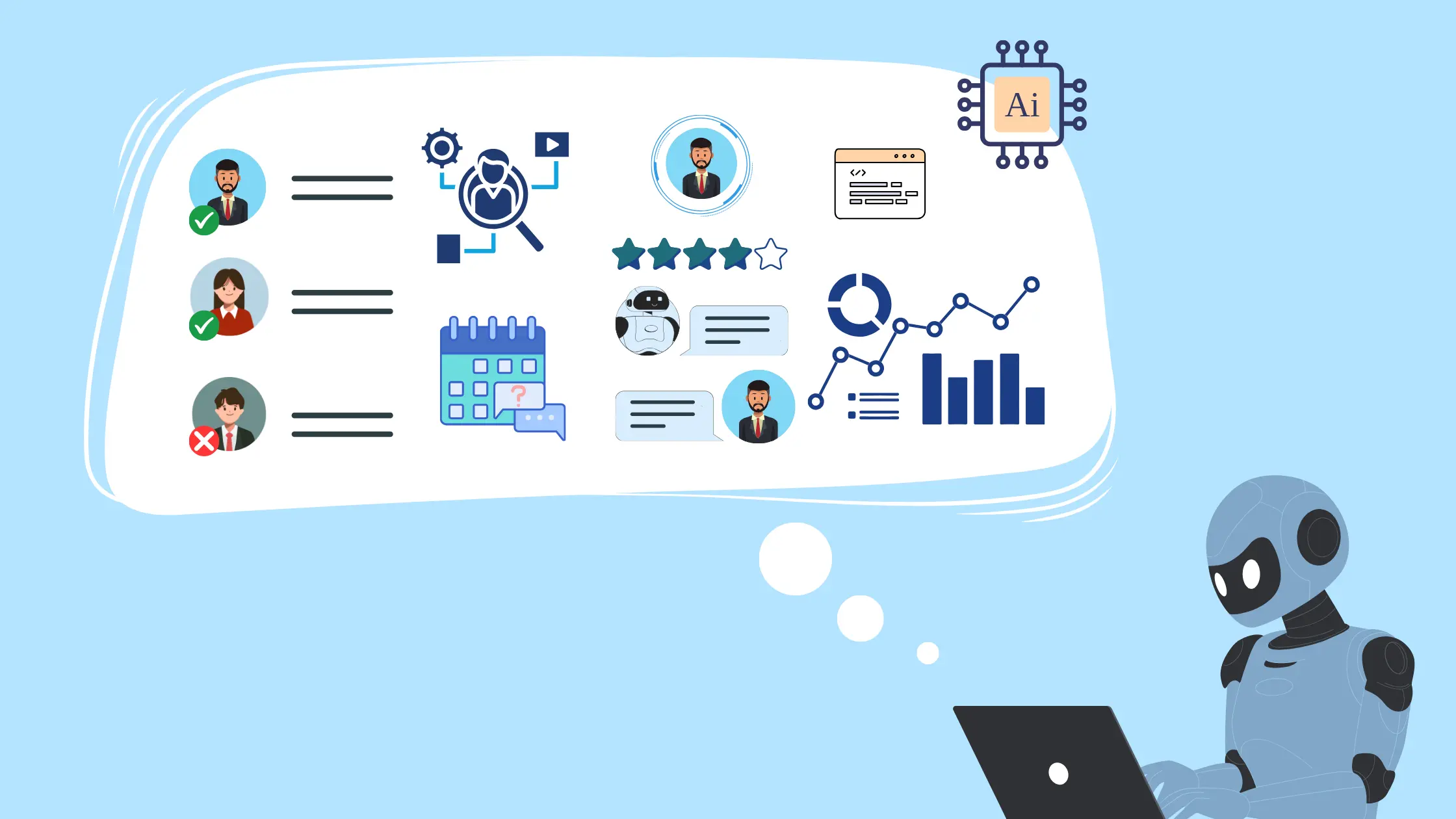
AI Agents are changing how talent teams work by automating repetitive hiring tasks and enabling HR teams to focus on strategy and candidate quality. This article shows practical ways AI Agents reduce manual effort across sourcing, screening, scheduling and communication while improving candidate experience and hiring outcomes.
TL;DR
- AI Agents replace repetitive hiring work such as CV screening, candidate outreach, interview scheduling and follow-ups.
- These intelligent systems use machine learning and natural language processing to make data-driven shortlisting and engagement decisions.
- Integrating AI in recruitment improves candidate experience through faster responses and personalised communications.
- Automated hiring process workflows cut time-to-hire and reduce administrative cost, freeing recruiters for strategic work.
- AI recruitment solutions support better hiring quality with predictive analytics and objective assessments.
- Adopting AI Agents positions organisations to scale hiring reliably while reducing bias and operational friction.
Why Is Traditional Hiring Still So Time-Consuming?
Despite steady improvements in HR technology, traditional hiring methods remain labour intensive. Recruitment teams still spend large blocks of time on routine tasks that add little strategic value.
- CV screening of hundreds or thousands of applications
- Scheduling interviews across multiple time zones
- Responding to candidate emails manually
- Coordinating between stakeholders for feedback and updates
- Shortlisting applicants using subjective criteria
- Writing and posting job descriptions across multiple job boards
- Updating candidate records in spreadsheets
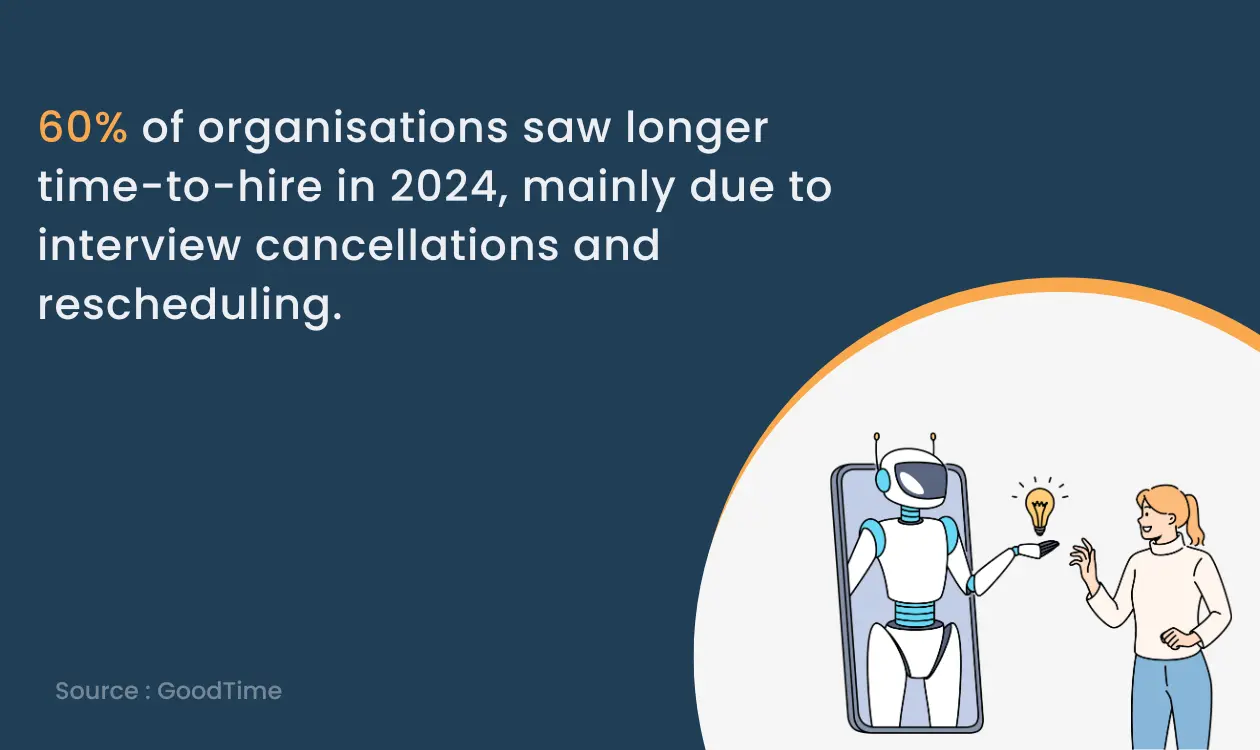
These activities are tedious and prone to human error and unconscious bias. A report by GoodTime shows 60% of organisations experienced increased time-to-hire in 2024, with interview cancellations and reschedules the leading bottleneck.
What Are AI Agents in Recruitment?
An AI Agents implementation in recruitment is an intelligent system that performs hiring tasks autonomously while learning from data. These agents go beyond fixed rules and use machine learning and natural language processing to understand context and make decisions.
The shift from basic automation to intelligent decision support changes how HR teams operate. It is no longer only about automating workflows; it is about augmenting recruiter judgement with continuous insights and automation.
How AI Agents Are Streamlining the Recruitment Process
1. CV Screening: AI-Powered Filtering and Ranking
AI recruitment software can analyse thousands of CVs in minutes, ranking candidates against role criteria and predictive success models. With natural language processing, AI Agents understand job titles, transferable skills and career progression beyond simple keyword matches.
2. Candidate Sourcing and Outreach
Modern AI hiring tools scan job boards, talent pools and professional networks to identify potential candidates. They enable personalised outreach at scale with AI-generated messages matched to candidate profiles, which improves response rates.
3. Interview Scheduling
Self-service interview scheduling tools allow candidates to pick slots without the usual back-and-forth. Integration with ATS and calendar systems means reminders and changes are handled automatically, cutting no-shows and reschedules.
4. Communication and Follow-up
AI chatbots and messaging agents provide round-the-clock support, answering candidate queries and sending personalised updates. These systems maintain engagement and transparency across the hiring journey.
5. Predictive Hiring and Cultural Fit
AI Agents use psychometric assessments, structured interviews and performance modelling to predict candidate success and retention. These data-driven signals help reduce reliance on gut judgement.
How Are AI Agents Enhancing the Candidate Journey?
One major benefit of integrating an AI Recruitment Agent into your hiring process is a substantially improved candidate experience. In a market where candidates apply to many roles, timely and personalised communication is essential.
AI-powered chatbots and messaging tools ensure candidates receive instant answers about job responsibilities, culture or application status. These 24/7 systems keep applicants informed at every stage and reduce frustration from long waiting periods.
AI hiring tools also automate status updates and reminders. Candidates receive notifications when their application progresses or when they must complete an assessment or interview. This clarity improves engagement and employer brand perception.
Moreover, AI enables more objective evaluation through data-driven assessments rather than subjective impressions. Psychometric tasks and voice or behavioural analysis provide additional insight into suitability beyond the CV.
How Can Smarter Hiring with AI Recruitment Agents Drive Stronger Business Results?
Using AI recruitment solutions is not only about efficiency. It is about unlocking measurable business outcomes. Eliminating manual bottlenecks lets organisations hire faster and make more strategic decisions.
Reducing time-to-hire matters. A 2025 PwC finding indicates top candidates are often available for about 10 days on average. Organisations using AI to automate screening, sourcing and scheduling can move faster and secure talent before rivals.
Automating routine hiring tasks also cuts cost. With fewer manual steps, HR teams can reallocate time to employer branding, talent development and workforce planning.
Most importantly, AI supports better hiring decisions. By analysing historical hiring data, performance outcomes and cultural fit indicators, AI Agents provide insights that go beyond resumes. This leads to higher quality hires, lower turnover and teams more aligned to organisational goals.
Practical Considerations When Deploying AI Agents
Introducing AI Agents requires careful planning. Consider data quality, integration with your ATS, and ethical guardrails to reduce bias. Start with high-volume, well-defined processes like screening and scheduling to demonstrate quick wins.
- Assess data readiness and clean candidate records before training models
- Integrate AI Agents with existing ATS and calendar systems for seamless workflows
- Define transparency and human review points to maintain fairness
- Monitor performance metrics such as time-to-hire, candidate satisfaction and hire quality
Conclusion
The rise of AI Agents in recruitment marks a clear move from manual hiring tasks to smarter, data-driven processes. By automating CV screening, interview scheduling and candidate communication, AI Agents help recruiters save time, reduce inefficiencies and streamline the recruitment process.
The goal is not to replace human recruiters but to enhance their impact. With modern AI hiring tools, teams can make faster, fairer and more strategic hiring decisions while delivering a better candidate experience. Organisations that adopt AI recruitment solutions will be better prepared for the future of recruitment and can scale hiring with consistency.
Stay ahead of the curve. Explore more HR insights and see how iSmartRecruit can support your automated hiring process by visiting our resources and requesting a demo.
Frequently Asked Questions (FAQs)
1. How are AI agents automating recruitment tasks?
AI Agents automate repetitive tasks such as CV screening, candidate sourcing, interview scheduling and communications. They reduce administrative load and help HR teams focus on strategic sourcing and interviewing.
2. What recruitment tasks can AI automate?
AI can screen resumes, shortlist applicants, schedule interviews, send automated updates and analyse skills. Recruitment automation tools take care of repetitive workflows so recruiters can concentrate on candidate engagement.
3. What are the benefits of AI in recruitment?
Benefits include faster time-to-hire, improved candidate experience, reduced manual cost and more objective assessments. Organisations using AI recruitment software can improve both hiring quality and operational efficiency.
4. Will AI replace recruiters?
No. AI augments recruiters by taking over routine tasks and supplying data-driven insights. Recruiters remain essential for relationship building, interviewing and final decision-making.
5. How can organisations measure AI success in hiring?
Track metrics such as time-to-hire, interview-to-offer ratios, candidate Net Promoter Score and retention of hires. These indicators show whether AI Agents improve efficiency and quality over time.
About the Author